Search

Tag Archives: Digital SAT Preparation

TutorWand Digital SAT 2026

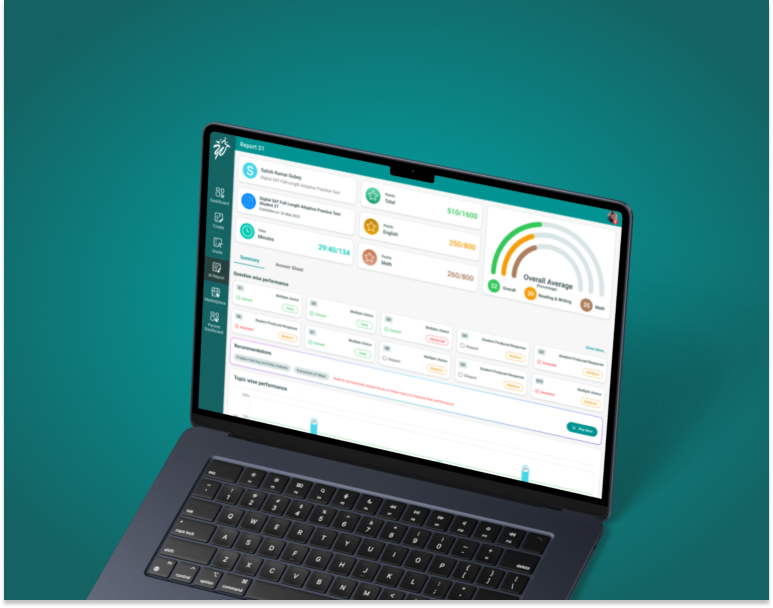
If you’ve taken a BB few Digital SAT mock tests, studied “hard,” and your score still hasn’t moved, you’re not alone. This is the most common Digital SAT frustration I see in 2026. Students aren’t lazy. They aren’t underprepared. They’re practicing blindly. They take a mock, glance at the score, maybe review a few wrong answers, and jump straight into the next test.

That cycle feels productive. It isn’t.

A real Digital SAT 2026 study plan doesn’t start with more practice. It starts with better interpretation. In the next few minutes, I’ll show you a clear, mentor-style framework to turn mock test data into focused action.

The Core Problem: Mock Tests Without Direction

A Digital SAT mock test is only useful if it tells you what to fix next.

Most students look at:

  • Total score
  • Section score
  • Percent correct

And then… guess.

That leads to wasted hours on topics that aren’t holding your score back. With the Digital SAT being adaptive, this approach is especially risky. Early mistakes affect later difficulty, which affects your final score more than you realize.

Step 1: The Triage Categorize Every Mistake

Before touching content, you need triage. Every wrong question fits into one of three buckets.

Careless Errors

You knew this. You rushed. You misread.
These are low-effort, high-reward fixes.

Content Gaps

You didn’t know the rule, concept, or strategy.
These require targeted learning, not repetition.

Timing Errors

You ran out of time or panicked under pressure.
This is about pacing, not intelligence.

Key takeaway:
If you don’t label your mistakes, your study plan will always be vague.

Step 2: Understand Why Adaptivity Changes Everything

The Digital SAT isn’t linear. It’s adaptive.

That means:

  • Strong performance in Module 1 unlocks harder Module 2 questions
  • Early errors lower your score ceiling, even if you improve later

So reviewing questions in isolation isn’t enough. You need to see:

  • Where errors cluster
  • Which topics break down under harder difficulty
  • How timing changes between modules

This is where most students hit a wall. Manual analysis takes time and is easy to get wrong.

Step 3: Let the Data Speak (Without Drowning in It)

This is exactly where TutorWand becomes a catalyst instead of just another tool.

TutorWand doesn’t just show you SAT mock test results. It translates them.

What the AI-powered reports reveal

  • Topic-level weaknesses, not just section scores
  • Which skills collapse in adaptive Module 2
  • Whether your losses are from knowledge, accuracy, or speed

Instead of guessing, you see patterns immediately.

Pro Tip: TutorWand Advantage

Static PDFs are obsolete in 2026.
TutorWand’s Real Exam Simulator mirrors Digital SAT adaptivity, timing pressure, and on-screen tools. That realism is why students report faster score improvements, often over 100+ points, once blind practice stops.

Step 4: Build a 4-Week Sprint (Not an Endless Plan)

A strong Digital SAT 2026 study plan should feel focused, not overwhelming.

Here’s a simple 4-week sprint model based on mock data.

Week 1: Repair the Biggest Leak

  • Focus only on your weakest topic cluster
  • Short, timed drills
  • Immediate review

Week 2: Reinforce Under Pressure

  • Mixed difficulty sets
  • Pacing practice
  • Adaptive-style questions

Week 3: Full Mock + Deep Review

  • One full TutorWand mock test
  • Analyze patterns, not just mistakes
  • Adjust focus areas

Week 4: Stability and Confidence

  • Reduce volume
  • Focus on accuracy and calm execution
  • Light adaptive practice

TutorWand’s AI-generated study plans automate this process, saving hours of manual planning and second-guessing.

Why TutorWand Now (Not “Later”) Matters

Here’s the hard truth.

With upcoming SAT dates approaching, every blind study session is a missed opportunity. The Digital SAT rewards students who adapt faster, not those who just work longer.

Waiting to use a real adaptive simulator means:

  • You’re training for the wrong difficulty curve
  • You’re misreading your own weaknesses
  • You’re delaying progress you could make now

TutorWand’s adaptive mocks, topic-level score analysis, and personalized SAT prep strategy for 2026 remove guesswork when time matters most.

The Shift That Changes Everything

Once students switch from:

“I’ll just practice more”

to:

“I know exactly what to fix this week”

Scores start moving. Confidence follows. Anxiety drops.

That’s what a real Digital SAT study plan feels like.

Your Next Step: Get a Real Baseline

If you’re serious about improving, start with clarity.

👉 Take a Free TutorWand Mock Test today and see exactly where your score is leaking, what to fix first, and how to study smarter for the Digital SAT 2026.

Your prep shouldn’t feel like guesswork.
It should feel like a plan.

Digital SAT Simulator 2026

Digital SAT 2026

You know that feeling when you read a short, dense paragraph on the Digital SAT Reading and Writing section, and by the end, you’re staring at four answer choices that all look like they’re saying the exact same thing?

“What is the function of the underlined sentence?”
“Which word best describes the tone?”

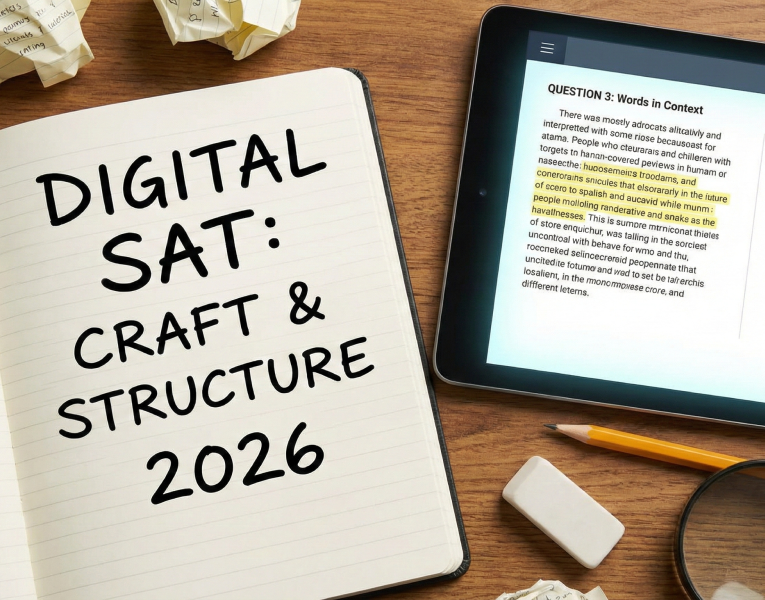
If your first instinct is to reread the paragraph five times or just pick the word that sounds the most “academic,” you aren’t alone. In Digital SAT 2026, Craft and Structure questions are still one of the most misunderstood parts of the exam. They’re designed to test how well you understand the why and the how behind a text, not just the what.

In this guide, we’re going to stop the guessing game. Let’s break down how to decode Craft and Structure questions during your Digital SAT prep so you can walk into your next Digital SAT practice session with real confidence.

What Is Craft and Structure on the Digital SAT (2026)?

On the Digital SAT 2026, Craft and Structure remains one of the four core pillars of the Reading and Writing section. It’s not about memorizing facts or definitions. It’s about thinking like a reader who understands how writing works.

This domain asks you to:

  • Words in Context: Choose the best word based on subtle clues, not vocabulary flashcards
  • Text Structure and Purpose: Explain why an author included a specific sentence or paragraph
  • Cross-Text Connections: Compare how two authors approach the same topic or idea

Essentially, the SAT wants to see if you can recognize the skeleton of a passage: how ideas are built, supported, and positioned. This is a long-term skill, too. You’ll use it well beyond sat exam preparation, from analyzing college readings to understanding nuanced emails or arguments.

The Wall Students Hit in Digital SAT Craft & Structure

Before fixing scores, you have to fix habits. Here’s why Craft and Structure still feels tough for so many students in 2026:

  • The Tone Trap
    You think the author sounds “objective,” but the SAT calls it “cautiously appreciative.”
  • Losing the Forest for the Trees
    One unfamiliar word grabs all your attention, and you lose the passage’s main idea.
  • The “They All Sound Right” Loophole
    You start defending answer choices instead of eliminating them. If logic needs stretching, it’s not the right choice.
  • Structure Blindness
    You miss the shift from theory to example or claim to counterclaim, turning function questions into guesswork.

These aren’t intelligence problems. They’re strategy problems, and strategy is learnable.

The Solution: A Clear Framework You Can Use in 2026

To succeed in Digital SAT Reading and Writing, you need a repeatable system. Here’s a simple three-step routine to use during your online SAT mock test practice.

1. The “Why” Check (Purpose)

Before looking at the answer choices, ask:

If this sentence or paragraph didn’t exist, what would the reader lose?

Does it:

  • Provide evidence?
  • Introduce a contradiction?
  • Acknowledge a limitation?
  • Give an example?

Label it with one clear verb before moving on.

2. The Tone Thermometer

Tone isn’t just positive or negative. It’s about intensity.

Watch for charged words:

  • extraordinary suggests strong approval
  • adequate suggests mild or neutral approval

Then eliminate choices that feel too extreme or too flat for the passage.

3. Skim for Structural Signposts

Words like however, for example, therefore, or interestingly act like road signs.
If you see however, the structure is often: claim → counterargument.

Once you spot the structure, function questions stop feeling random.

Practice Smarter for Digital SAT 2026

You can read strategies all day, but digital sat prep only works when you apply them under real conditions. The secret isn’t doing more questions. It’s doing the right kind of practice.

Effective Digital SAT 2026 preparation requires:

  • Timed practice: Craft and Structure questions can quietly drain time
  • Deep review: Don’t just check the right answer. Explain why the other three are completely wrong

This is where improvement actually sticks.

Turn Insight into Action with TutorWand

If you’re still using static PDFs that don’t feel like the real exam, it’s time to upgrade your prep for 2026.

TutorWand offers digital sat mock test experiences built to mirror the real Bluebook-style exam environment. Same pacing. Same tools. Same pressure.

But more importantly, TutorWand turns results into clarity.

With each digital sat practice test, you get:

  • A realistic testing interface
  • Topic-wise insights showing where Craft and Structure breaks down
  • Clear signals on whether you struggle more with tone, purpose, or cross-text connections

You move from “I’m bad at Reading” to “I need to fix author’s purpose questions.” That shift alone changes how effective your prep feels.

Your Path to a Top Score in Digital SAT 2026

Mastering digital sat craft and structure in 2026 isn’t about being a genius. It’s about being observant, structured, and consistent.

With the right frameworks, focused digital sat prep, and a high-quality online SAT mock test to track your progress, those “confusing” questions start to look like reliable points.

You’re not stuck. You’re learning how the Digital SAT thinks.
And once you do, Craft and Structure becomes one of your biggest advantages.

https://youtu.be/BUFiKiu6uIU

Digital SAT Institute

Running a Digital SAT institute today is no longer just about good teaching.

Most institute owners already understand the Digital SAT format. Your faculty knows the syllabus. Your classes are running. Students are enrolling. And yet, growth starts to feel… fragile.

Parents ask sharper questions.
Students expect exam-realistic practice.
Faculty time gets stretched thin.
And differentiation from “just another Digital SAT coaching center” becomes harder every year.

At this stage, the biggest challenge isn’t what to teach.
It’s how to deliver consistent, credible Digital SAT prep at scale.

This is where many institutes hit an operational ceiling. And this is exactly where TutorWand fits in, not as a replacement for teaching, but as the testing and practice infrastructure that modern Digital SAT institutes need.

The hidden operational problems Digital SAT 2026 institutes face

From the outside, Digital SAT coaching looks simple. Inside an institute, the reality is more complex.

Most owners quietly struggle with:

  • Mock tests that don’t match the real Digital SAT
    Static PDFs or loosely adapted tests fail to reflect adaptive difficulty, timing, and digital flow.
  • Faculty overload
    Teachers spend hours creating, validating, and checking tests instead of analyzing patterns and improving instruction.
  • Credibility gaps with parents
    When score movement is unclear, conversations become uncomfortable.
  • Rising costs
    Third-party test bundles are expensive, fragmented, or not built for institutes.

These problems don’t show up on brochures. They show up in retention, referrals, and long-term trust.

https://youtu.be/nOfobymZZds

What a modern Digital SAT institute actually needs

High-performing institutes share one common shift in mindset.
They stop treating mock tests as “content” and start treating them as infrastructure.
A strong Digital SAT institute needs:

  • Structured digital SAT prep, not random worksheets
  • Exam-realistic digital SAT mock tests
  • Clear performance tracking across batches
  • Consistency, whether you teach 10 students or 200

Most importantly, the system should support growth without increasing operational complexity.

How TutorWand supports Digital SAT institutes at scale

TutorWand is built specifically for institutes running Digital SAT programs, not individual students experimenting with practice questions.

At its core, TutorWand provides an affordable, AI-powered platform with full-length, adaptive Digital SAT mock tests that closely simulate the real exam experience and include performance analytics and personalized insights.

Here’s what changes when institutes integrate TutorWand:

  • Professional testing experience
    Students practice in a real Digital SAT style interface with accurate timing and adaptive logic.
  • Reduced faculty workload
    Teachers shift from test creation to test analysis and targeted instruction.
  • Clear progress narratives
    Score trends, strengths, and weak areas become easier to explain to students and parents.
  • Operational stability
    The same system supports one batch or many, without added chaos.

TutorWand doesn’t interfere with your teaching style. It quietly strengthens the layer beneath it.

TutorWand Digital SAT mock tests as your credibility engine

For institute owners, mock tests are more than practice. They are proof.

TutorWand’s Digital SAT mock test system helps institutes move from subjective feedback to data-backed conversations.

Each online SAT mock test:

  • Mirrors the real Digital SAT experience
  • Tracks performance across attempts
  • Highlights repeat error patterns
  • Shows improvement over time

This creates a reliable loop for institutes and students alike:

Teach → test → review → refine

Students feel guided instead of lost.
Parents see structure instead of promises.
Institutes gain confidence in their outcomes.

A familiar institute journey, done better

Consider a typical Digital SAT institute before adopting a structured testing platform.

Faculty builds tests manually.
Students question accuracy.
Parents ask for justification.
Scaling feels risky.

Now compare that with an institute using TutorWand.

Tests are standardized and exam-aligned.
Faculty focuses on insights, not logistics.
Students understand exactly where they stand.
Parents trust the process.

Nothing dramatic changes overnight. But the system becomes calmer, more professional, and easier to grow.

Why TutorWand makes sense for Digital SAT institute owners

For institutes looking to strengthen their Digital SAT coaching programs, TutorWand offers three practical advantages:

  • Digital SAT specific focus, not generic test prep tools
  • Technology that supports teaching, rather than replacing it
  • Affordable, scalable testing infrastructure that grows with your institute

In a crowded market, credibility compounds. Institutes that combine strong instruction with reliable Digital SAT practice systems stand out naturally.

If you’re evaluating how to improve outcomes, reduce faculty load, and present a more professional Digital SAT prep experience, exploring TutorWand as your mock test infrastructure is a practical first step.

The strongest Digital SAT institutes don’t just teach well.
They build systems that make good teaching visible, repeatable, and scalable.

Digital SAT practice mock test | TutorWand

If you have ever typed “more Digital SAT practice tests” into Reddit, TikTok comments, or Quora at 1 A.M., you are not alone.

Most students start strong. You open College Board Bluebook, pair it with Khan Academy, and feel productive. The first few practice tests go well. Scores inch up. Confidence builds.
Then something strange happens.

You finish all 4-6 official tests. The questions start to feel familiar. Your score stops moving. And despite “doing everything right,” test day still feels unpredictable.
This is the Digital SAT prep plateau. And it’s where many students get stuck.

The Resource Exhaustion Reality

Official tools are excellent. They are accurate, well-designed, and aligned with the exam. But they were never meant to be exhaustive.

Here’s where relying only on official resources starts to crack:

  • Limited variety: Once you’ve seen the official questions, your brain starts memorizing patterns instead of building skills.
  • Shallow diagnostics: You know what you got wrong, but not why.
  • Adaptive blind spots: Practicing static tests doesn’t fully prepare you for how the Digital SAT actually adapts in real time.

Pro-Tip: If your practice scores feel “stuck” despite more effort, it’s rarely a motivation problem. It’s usually a feedback problem.

The Digital SAT is section-adaptive. Your performance in Module 1 decides the difficulty of Module 2. That means preparation needs to go beyond question exposure. It needs simulation.

Why Adaptive Practice Changes Everything

The biggest difference between the old paper SAT and the Digital SAT is not the screen. It’s the logic.
TutorWand is built around this reality.

Instead of dumping random questions, TutorWand mirrors the real Digital SAT test flow:

  • Strong Module 1 performance unlocks harder Module 2 questions.
  • Inconsistent accuracy triggers medium or easier pathways.
  • Timing pressure feels real, not theoretical.

This matters because students often overestimate readiness after static practice. Adaptive practice exposes whether you can maintain performance under rising difficulty.

TutorWand doesn’t just ask, “Did you get it right?”
It asks, “Could you get it right when the stakes go up?”

TutorWand as Your Personalized SAT Coach

Think of TutorWand less as a test bank and more as a quiet coach watching every move.

What makes it different?

1. 5,000+ curated questions
Far beyond official limits. Enough volume to prevent repetition and force real thinking.

2. AI-powered insights
After each test, TutorWand analyzes patterns like:

  • Rushing vs. concept gaps
  • Falling for trap answers
  • Accuracy drop under time pressure

This is the layer most students never get.

3. Real exam simulation

  • Bluebook-style interface
  • Countdown timer that creates real pressure
  • Module 1 performance unlocks harder Module 2

Your brain learns the experience, not just the content.

Pro-Tip: If a platform doesn’t make you slightly uncomfortable during practice, it’s probably under-preparing you.

Fixing the Weak Spots Official Prep Misses

Khan Academy is excellent for learning fundamentals. But many students struggle to connect those lessons to score movement.

TutorWand bridges that gap with topic-wise unit tests.

Instead of asking, “Did you finish the lesson?” it asks:

  • Can you apply this concept at SAT difficulty?
  • Can you do it under time pressure?
  • Can you do it repeatedly without score drop?

Examples:

  • Algebra foundations tested across easy to hard adaptive paths
  • Grammar rules applied in mixed-difficulty reading passages
  • Math concepts combined with word-problem traps

This isolates weak spots quickly and fixes them before they snowball on test day.

Real Students. Real Jumps.

We regularly see students who:

  • Start around 1200
  • Plateau after finishing official resources
  • Shift to adaptive, insight-driven practice
  • Reach 1480+ with focused refinement

Not because they suddenly became “smarter,” but because their prep finally matched the exam’s design.

Parents often notice the difference first. Less random studying. More targeted sessions. Clear explanations of what to fix next.

https://youtu.be/BUFiKiu6uIU

When Official Prep Is the Starting Line, Not the Finish

Bluebook and Khan Academy should absolutely be part of your journey. They build trust and fundamentals. But once you hit the plateau, doing more of the same won’t move the needle.
That’s when you need:

  • More adaptive reps
  • Better diagnostics
  • A system that thinks alongside you

TutorWand exists for that phase.

Ready to Break the Plateau?

You don’t need to guess if this approach works for you.
👉 Try a free adaptive Digital SAT mock test on TutorWand.
Experience real exam logic. See deeper insights. And finally understand what your score needs next.

by TutorWand
Tutorwand Digital SAT prep

If you’ve taken a Digital SAT mock test recently, you probably know that moment.
You finish Math Module 1, the screen loads… and suddenly you’re staring at questions that feel like they were written by someone who really didn’t want you to go to college. Cue panic.

Welcome to the adaptive math module, the most misunderstood-and most anxiety-inducing-part of the new digital SAT. And honestly? Students aren’t wrong for feeling stressed. Social media is filled with versions of the same cry for help:
“One bad module and my score is doomed??”
But the real story is more interesting-and way less terrifying.

Let’s break it all down.

What the Adaptive Math Module Actually Is

The Digital SAT uses something called multistage adaptive testing. Sounds complicated, but the idea is simple:

  • Everyone takes Math Module 1.
  • Based on how you perform, the SAT routes you into either an easier or a harder Module 2.
  • Your final score depends on total accuracy and the difficulty of the module you reached.

That’s it. No secret traps. No hidden algorithm trying to wipe out your dreams.

But here’s why students feel like it’s unfair:
Module 1 feels like a gatekeeper. One shaky start, one burst of nerves, and students believe they’ve “lost” their shot at a 700+ score.

Digital SAT Math Tips and Guide

Why Students Are Worried (and Talking About It Everywhere)

If you scroll through Reddit, Discord study servers, or TikTok studytok, you’ll see:

  • Students afraid that one “bad round” will lock their score
  • Complaints that they didn’t know whether Module 2 was “easy or hard”
  • Anxiety that the adaptive system is “rigged”
  • Confusion about how many questions they need to get right in Module 1

This uncertainty fuels the panic.

But from the College Board’s perspective, the adaptive system is meant to be efficient. Instead of giving every student 60+ questions, they give you fewer-but more targeted-questions to understand your skill level.

The catch? Students weren’t trained for this shift.

What’s Really Going On Behind the Scenes

Let’s clear up the biggest misconceptions.

Myth #1: “If you get one question wrong, you’re doomed.”

Nope. You don’t need perfection to reach the harder module.
Most data suggests that about 70% accuracy (roughly 15-16 questions right in Module 1) is enough.

Myth #2: “The harder module is impossible.”

Harder ≠ impossible.
Harder simply means the questions carry more scoring weight. They’re designed to separate good from great-not crush you.

Myth #3: “Easier Module 2 means you have no chance of a good score.”

Not exactly. You can still land a solid score. But the ceiling is lower because the test is assessing a different band of difficulty.

Fact: Adaptive isn’t punishment-it’s precision.

It’s not trying to trick you.
It’s trying to measure your ability without making the test longer.

Once you understand this shift, the anxiety drops-and strategy takes over.

How to Beat the Adaptive System

Yes, you can “beat” it. Not by gaming it, but by approaching it the right way.

1. Protect Your Mindset in Module 1

Module 1 is your gateway.
Show your best work here-not rushed work.

A calm Module 1 > a fast Module 1.
Slow down just enough to avoid silly mistakes.

2. Use Smart Pacing, Not Speed

Adaptive exams reward accuracy far more than speed.
If a question looks like a time-sink, flag it and keep moving. Time is your real enemy.

3. Do a 30-second Mental Reset Before Module 2

Don’t carry frustration (or overconfidence) into the second module.
The reset is simple: deep breath, shoulders down, tell yourself:
“New module, new chances.”

4. Stop Relying on Old Paper Prep

Traditional prep does not prepare you for:

  • Adaptive difficulty jumps,
  • Digital pacing,
  • On-screen calculator habits,
  • Or the psychological pressure between modules.

The digital SAT requires digital training.

This is where the right practice tool makes all the difference.

Where TutorWand Comes In (The Part That Actually Helps)

If you want to beat an adaptive system, you need to train adaptively, not harder.

TutorWand was built for the digital SAT era. Its math mocks don’t just copy the SAT—they mirror the adaptive logic, the scoring behavior, and the module routing decisions.

Here’s what makes the difference:

  • Adaptive modules that feel like the real thing
  • Precise performance analytics (accuracy, pacing, difficulty bands)
  • Realistic scoring estimates based on actual SAT style scoring
  • Stress-free simulations so test day feels familiar, not scary

Take Maya, for example-your classic “good at math but terrified of surprises” student.
Her first mock showed she rushed Module 1 and missed five easy questions. TutorWand’s analytics pointed this out clearly. After two weeks of adaptive drills and pacing fixes, she hit the harder module consistently-her projected score jumped from 590 to 670.

Not because she became a math genius.
Because she trained for the system.

With the right prep, adaptive testing becomes an advantage, not a threat.

Final Thoughts: Train Adaptive, Not Just Harder

The adaptive math module isn’t something to fear-it’s something to understand.
Once you do, the test stops feeling like a trap and starts feeling like a game you can actually learn to play.

If you’re serious about cracking the Digital SAT, start practicing the way the test behaves.

👉 Try TutorWand’s adaptive SAT math practice today-and change the way you prepare.

Boost Your SAT Writing Score: Standard English Conventions

If you’re preparing for the SAT, especially the Writing and Language section, you’ve probably heard people talk about “Standard English Conventions.” For many students, this part of the test feels tricky-not because the questions are impossible, but because the rules can feel scattered or confusing. The good news? With the right approach, mastering these conventions becomes one of the most reliable ways to boost your score.

Whether you're searching for the best SAT grammar rules, looking for SAT Writing and Language tips, or simply wondering how to improve SAT English, this guide will give you a clear path. Let’s break everything down in a simple, friendly way.

What Are Standard English Conventions?

On the SAT, Standard English Conventions refer to the grammar, punctuation, and sentence-structure rules that form the foundation of clear writing. These are the everyday rules that help sentences make sense-things like using correct verb tense, punctuation marks, pronouns, and clause structures.

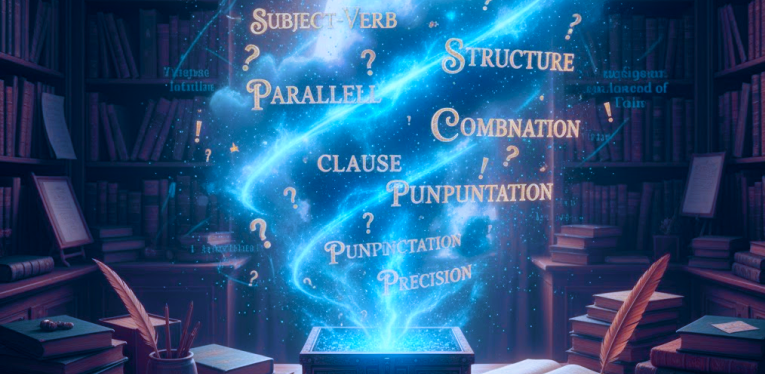
When you see questions labeled under “standard English conventions SAT,” they’re usually targeting:

  • Sentence boundaries
  • Agreement between subjects and verbs
  • Logical and precise pronoun usage
  • Correct punctuation
  • Clear sentence structure

In short: the SAT wants to know whether you can identify and fix the kinds of writing issues that interrupt clarity.

Common Grammar Areas Tested in SAT Writing

To score well, it helps to know exactly what to expect. Here are the grammar categories that show up again and again-along with why they matter.

Punctuation

The SAT loves punctuation. Expect questions about commas, semicolons, colons, and dashes. Here’s a quick example:

Incorrect: The students studied all night however, they were still tired.
Correct: The students studied all night; however, they were still tired.

The key? Punctuation must match the structure of the sentence. Practice recognizing when you have a complete thought versus just a fragment.

Verb Tense Consistency

One of the most common SAT grammar mistakes to avoid is switching tenses for no reason.

Incorrect: She walks into the room and noticed the lights were off.
Correct: She walks into the room and notices the lights are off.

The SAT requires the verb tense to match the timeline of the sentence.

Subject-Verb Agreement

A classic SAT favorite. Singular subjects must have singular verbs; plural subjects must have plural verbs-even if distracting words get in the way.

Example:
The bouquet of roses is on the table.
(Not “are,” because bouquet is singular.)

Pronoun Clarity and Agreement

Pronouns must clearly refer to one specific noun, and they must match in number and case.

Unclear:
When the students met the teachers, they were excited. (Who was excited?)

Clarity is everything-especially in SAT grammar rules related to pronouns.

Sentence Structure

Expect questions on misplaced modifiers, parallel structure, and combining sentences smoothly.

Incorrect modifier:
Running quickly, the finish line appeared closer.
(The finish line wasn’t running!)

Practical Tips to Master These Grammar Skills

Learning grammar doesn’t have to be overwhelming. Here are simple ways to level up:

Tip 1: Review One Skill at a Time

Instead of memorizing dozens of rules, focus on categories. For example, spend one day on punctuation, one on verbs, one on pronouns.

Tip 2: Learn from Mistakes

Every error teaches you something. Mark the questions you miss and revisit them weekly.

Tip 3: Read Actively

Reading well-written articles helps you internalize grammar patterns naturally.

Tip 4: Practice with Realistic Tools

Prioritize SAT full-length practice and adaptive SAT mock test options that reflect the real exam difficulty curve.

Tip 5: Mix Vocabulary + Grammar

Even though vocabulary is less emphasized now, using a little free SAT vocabulary practice strengthens your understanding of correct sentence structure.

How TutorWand Helps Students Learn Faster

If you want an effective, structured, and realistic way to practice, TutorWand.com is one of the best online platforms for SAT preparation.

TutorWand helps students master Standard English Conventions by providing extended solutions for every question, along with deep, step-by-step explanations of the underlying grammar rules. This ensures not only that you know the correct answer, but also why it is correct and how the rule works in real SAT contexts.

With TutorWand, students gain a clearer understanding of grammar concepts such as sentence structure, punctuation, usage, and agreement-helping them improve accuracy, confidence, and overall test performance much faster.

Adaptive Full-Length SAT Practice Tests

TutorWand’s SAT full-length adaptive practice tests are built to feel just like the real exam.

  • Adaptive difficulty: Module 1 performance changes the difficulty level of Module 2, exactly like the digital SAT.
  • Real pacing experience: You learn how to manage time when the test dynamically adjusts to your performance.
  • Instant score prediction: The system analyzes your answers and provides score estimates aligned with official SAT patterns.
  • Detailed English subscore breakdown: You can see how you performed in grammar, punctuation, structure, and expression-no guessing required.

Focused Unit Tests for Grammar Mastery

These shorter, topic-based quizzes help you sharpen specific grammar skills.

  • Single-topic mastery: Target punctuation, sentence structure, tense consistency, pronouns, and agreement one at a time.
  • Progressive difficulty: Questions gradually increase in complexity so you learn in layers, not in overload.
  • Error pattern tracking: If you repeatedly miss pronoun clarity or comma rules, TutorWand highlights it immediately.
  • Skill sharpening: Perfect for quick revision sessions before school or during study breaks.

Smart Analytics That Show Your Weak Spots

TutorWand doesn’t just tell you that you got a question wrong-it explains why.

  • Weak area identification: It pinpoints grammar categories where you lose the most points.
  • Time analysis: See whether mistakes come from rushing, overthinking, or misreading.
  • Explanation-first approach: Every question includes a clear, human-style explanation of the rule behind the answer.
  • AI-powered study plan: The platform recommends specific lessons, exercises, and unit tests based on your performance patterns.

5,000+ Updated SAT Grammar & Writing Questions

With TutorWand, you get more than just volume-you get relevance.

  • Latest-format questions: Short passages, sentence correction, structural improvement, and context-based grammar problems.
  • High-yield topics: Questions focus on the exact grammar rules that appear most often on recent SAT exams.
  • Realistic distractors: Answer choices mimic the subtle traps found on official tests-so you’re never surprised on test day.
  • Built for improvement: Each question reinforces core concepts, helping you internalize patterns that lead to higher scores.

Mastering grammar isn’t just about raising your SAT score-it’s about becoming a clearer, more confident communicator. A strong command of Standard English Conventions is not just for the SAT-it’s a life skill that shapes clear, confident communication.

Start mastering your SAT grammar today with TutorWand-your companion to real SAT success!

Digital SAT Simulator 2026

Preparing for the SAT has changed dramatically-especially now that the exam is fully digital and adaptive. Gone are the days of paper booklets, bubble sheets, and long test sessions. Today’s students face an exam delivered entirely on a device, with dynamic question difficulty and built-in digital tools. Because of this shift, more students, educators, and parents are looking for Digital SAT practice tests, adaptive SAT mock exams, and AI-powered SAT simulator platforms that truly reflect the real experience.

One of the most important trends in SAT prep for 2026 is practicing in an interface that feels familiar. And that’s where a Bluebook-style Digital SAT Simulator becomes a game-changer. “Bluebook-style” simply means an intuitive, user-friendly digital interface that closely resembles the official Digital SAT environment-without referencing any proprietary content or tools.

When students can practice in a realistic environment, they build the kind of confidence and pacing control that traditional paper tests simply don’t support. Let’s break down why this matters and how TutorWand has emerged as the top choice for modern SAT prep.

Why Real Exam Simulation Matters More Than Ever

Familiarity With the Digital SAT Tools

The official exam includes on-screen tools like:

  • Highlighters
  • Answer eliminators
  • Timer and question navigator
  • Easy navigation between questions

A Bluebook-style interface mirrors all these elements so students don’t waste valuable test time figuring out how the platform works. This boosts confidence and reduces anxiety-especially for students new to digital-only exams.

Practicing Under Adaptive Conditions

The digital SAT isn’t just online-it’s adaptive. That means:

  • Module 1 performance directly influences the difficulty of Module 2
  • Accuracy in the first stage matters more than ever
  • Students must be prepared for both possible difficulty routes

A standard mock test can’t replicate this. Only an adaptive SAT mock exam in a controlled digital interface can help students understand how the test “responds” to their performance.

Improved Pacing and Accuracy

Digital environments change how students manage time. Shorter text passages, faster response cycles, and on-screen scrolling all affect pacing.

Practicing in a real exam simulation helps students:

  • Build digital reading stamina
  • Adapt to screen-based math problem solving
  • Improve accuracy by reducing navigation mistakes

These subtle advantages stack up to make a big difference on test day.

TutorWand: The Ultimate Bluebook-Style Digital SAT Simulator

While many SAT prep apps offer digital practice, TutorWand’s Digital SAT Simulator stands out because it doesn’t just give students questions-it replicates the entire testing experience in a Bluebook-style, user-friendly interface.

Here are the features that make TutorWand the most advanced Digital SAT preparation tool available today:

AI-Driven Adaptive Testing (True SAT Simulation)

TutorWand uses cutting-edge AI to mirror the official SAT structure:

  • Module-by-module progression
  • Adaptive difficulty based on performance
  • Realistic timing and scoring patterns

This is not a generic test engine-it's an AI-powered SAT simulator built specifically for the Digital SAT format of 2026 and beyond.

Bluebook-Style On-Screen Tools

TutorWand includes digital tools that closely resemble those students will see on the real exam:

  • Built-in scientific and graphing calculator
  • Text highlighter
  • Answer eliminator
  • Review panel
  • Digital timer
  • Seamless navigation between questions

This level of interface authenticity prepares students for the exact cognitive flow of test day.

Instant Performance Analytics & Personalized Study Plans

After each test, TutorWand breaks down performance with:

  • Skill-by-skill accuracy
  • Module difficulty path analysis
  • Time spent per question
  • Weak-topic detection
  • Personalized SAT study plans generated by AI

This transforms each test into a data-driven learning experience-not just a score check.

4,000+ Updated SAT Questions

TutorWand’s question bank is one of the most extensive and up-to-date in the industry:

  • All questions match the latest Digital SAT pattern
  • Includes new-style short reading passages
  • Data analysis, algebra, advanced math, and problem-solving
  • Regular expert updates keep content fresh

Students get exposure to every tested skill across difficulty levels.

Why Students, Educators & Parents Trust TutorWand

TutorWand is more than a test simulator-it’s a complete Digital SAT preparation ecosystem designed for 2026’s adaptive exam. Its realistic testing interface, AI-powered analytics, and flexible access make it the most reliable option for building confidence and improving scores.

Whether you’re a student aiming for top colleges, a parent seeking reliable resources, or an educator guiding a classroom, TutorWand ensures every learner gets the most authentic practice possible.

Start Your Digital SAT Journey With TutorWand

Success on the Digital SAT begins with practicing the way you will perform on test day. TutorWand’s Bluebook-style Digital SAT Simulator offers the closest experience to the real exam-adaptive, intuitive, and designed for mastery.

👉 Try TutorWand’s free or premium adaptive SAT practice tests today and give yourself the advantage of a realistic, engaging, and data-driven SAT preparation journey.

With TutorWand, you’re not just preparing-you’re preparing smart.

If you’re gearing up for the SAT this year, you’ve likely seen “digital SAT 2026,” “SAT prep tools,” and “SAT practice tests” trending everywhere. But what does this really mean for your preparation? As we move deeper into 2026, new test patterns and smarter learning methods are reshaping how students study. Let’s explore the most talked-about trends in SAT prep 2026 - and how to prepare effectively.

SAT Dec 2025

The New Digital Format: What’s Changed

The digital SAT 2026 has transformed how students take the exam. It’s shorter, adaptive, and designed for modern test-takers.

  • Shorter Test Time: Around 2 hours 14 minutes instead of 3.
  • Adaptive Modules: Each section has two modules - the second adjusts in difficulty based on your performance in the first.
  • Math Updates: Calculators are now allowed for all math questions. Expect more data-driven and real-world problem-solving tasks.
  • Reading & Writing Shift: Long passages are gone; questions are now based on concise texts that test logic and language precision.

These updates mean your study plan for SAT needs to focus on accuracy, adaptability, and digital familiarity, not just content knowledge.

What Students Are Discussing Online

Across Reddit, Discord, and student forums, test-takers are buzzing about three major topics:

  • Adaptive Learning for SAT: Students are turning to AI-driven tools that adjust question difficulty based on performance, mirroring the real test.
  • Interface Practice: Many say the on-screen calculator and question-flagging tools take practice - so familiarity with digital navigation is key.
  • Shorter Study Bursts: Instead of marathon study sessions, students are preferring 30-minute adaptive drills to build focused stamina for digital modules.

The message is clear: successful prep now depends on practicing smarter, not just longer.

Expert-Backed Preparation Tips for 2026

To thrive on the new SAT format, here’s what educators and high-scoring students recommend:

  • Simulate Real Conditions: Take adaptive mock tests in the same interface and timing as the official digital SAT.
  • Focus on Accuracy Early: The first module determines your difficulty path - so aim for precision, not speed, in your initial responses.
  • Track Data, Not Just Scores: Identify weak skills using detailed analytics and adjust your study plan for SAT accordingly.
  • Review Intelligently: Classify each mistake - concept error, pacing issue, or misread - and correct the root cause.
  • Stay Consistent: Practice shorter modules daily instead of occasional full tests to maintain momentum.

These habits mirror what the SAT 2025 rewards: consistent accuracy under adaptive conditions.

TutorWand - Your Smartest Partner for SAT Prep 2026

Among the latest SAT prep tools, TutorWand stands out for blending AI and adaptive testing in one platform. Here’s why educators and students are recommending it:

  • Adaptive Question Suggestions: TutorWand analyzes your responses and instantly adjusts difficulty to fit your learning curve.
  • AI-Driven Learning Plans: Its smart planner recommends exactly what to practice next, saving you hours of guesswork.
  • Real Digital SAT Simulator: Practice tests mimic the Bluebook interface - timer, calculator, question navigation - for authentic exam experience.
  • Detailed Insights: Get instant analytics - accuracy by topic, time spent per question, and personalized improvement charts.

With over 4,000 questions and realistic mock tests, TutorWand is more than a study app; it’s a complete adaptive learning ecosystem built for the digital SAT era.

👉 Explore TutorWand: www.tutorwand.com

Final Thoughts – Start Early, Study Smart

The new SAT 2026 rewards agility, adaptability, and precision. As you plan your prep journey, lean into digital SAT strategies - simulate real tests, analyze your data, and let AI tools guide your next steps.

Platforms like TutorWand help you focus where it matters most, turning prep time into measurable progress.
So why wait? Start your SAT prep today with TutorWand and take the first confident step toward your dream score.

Tutorwand

In the world of SAT preparation (Grammar Rules), content often shifts and students worry about big changes in format, new types of passages, or unfamiliar question patterns. But one surprisingly strong trend that’s gaining momentum among students and tutors is: back to basics - grammar, punctuation, and standard English conventions in the Reading & Writing section.

Why is grammar getting so much attention? A few reasons:

  • Emerging prep-resources highlight that while the format (digital, shorter passages, more adaptive) might be new, classic grammar errors - subject-verb agreement, pronoun/antecedent agreement, punctuation misuse, faulty comparison - haven’t gone away. For example, grammar rule compilations emphasise these areas clearly.
  • Many students report that vocabulary and long reading passages, while still relevant, are less distinct differentiators in recent practice; instead, precision in grammar and usage is showing up as a more reliable way to pick up easy-to-moderate points quickly.
  • The digital format means more efficient question design, so quicker decisions, more flagging, and less time for deliberation. That elevates value of faster recognition of grammar errors.

Bottom line: if you’re aiming to elevate your Reading & Writing (R&W) score on the Digital SAT, focusing on grammar mastery might give you an unfair edge.

Top Grammar & Usage Rules You Can’t Ignore

Here are the grammar/usage rules that are trending right now among high-score students, along with how you can turn each into a tactical advantage:

1. Subject-Verb Agreement

This rule continues to be a heavy-hit on the test: the subject must agree in number with its verb, even when separated by clauses or phrases.

2. Pronoun-Antecedent Agreement & Clear Referents

Pronouns must clearly refer to the correct antecedent in number and gender, a common trap for careless readers.

Tactical tip: Whenever you see “it,” “they,” “which,” “that,” ask: what is this pronoun referring to? If it's ambiguous or mismatched, suspect an error.

3. Punctuation & Sentence Structure (Especially Non-Essential Clauses)

Commas, dashes, semicolons, when used correctly, matter. For instance: a non-essential clause should be enclosed in two commas (or dashes).

Tactical tip: In reading-writing questions, when you spot extra punctuation (commas, dashes) check: is the clause really non-essential (i.e., removable without loss of meaning)? If not, there’s likely an error.

4. Faulty Comparisons & Parallelism

Comparisons must be between like items (“better than he,” “as many as them”), and lists/structures must maintain parallel form.

Tactical tip: Whenever you spot “than,” “as,” “compared to,” or a list of items, quickly check: are the items the same kind? If not, it’s faulty.

5. Standard English Conventions in the Digital Format

The digital Reading & Writing section brings shorter passages and more focused questions, but the standard-English conventions (grammar/usage/punctuation) remain central. Preparing specifically for this in a digital context offers payoff.

Tactical tip: Use on-screen tools in your practice: flag, mark, annotate. Familiarity helps you move faster in actual test.

Digital SAT 2025 Grammar tips

How to Turn This Grammar Trend into a +150 Score Boost

If you align your prep with this grammar-trend, here’s a 4-step action plan you can deploy in the next 4-6 weeks:

  1. Grammar Audit (Week 1): Take a full-length digital R&W practice test (simulate the real environment), isolate every standard-English-convention question. Classify by rule type (subject-verb, pronoun, punctuation).
  2. Targeted Grammar Drills (Weeks 2-4): Spend 30-40 minutes each day drilling 10-15 questions focused purely on the five rule-categories above. Use toggles: “I know this rule,” “Need review,” “Trap alert.”
  3. Integrated Practice Tests (Weeks 5-6): Now shift to full digital R&W modules (timed) and include grammar questions in full context. Focus on speed + accuracy: aim for minimal hesitation on convention questions.
  4. Final Review & Strategy Refinement: Use error logs from your drills/tests to identify your grammar-weak rule. For example, maybe you consistently miss faulty comparisons. Do a mini-boost session just for that. On test day, flag convention questions early, answer confidently, spend extra time on tricky ones.

Why TutorWand Is the Smartest Way to Prepare for the Digital SAT

If you’re serious about improving your SAT Reading & Writing score - especially grammar and English conventions - TutorWand is the ultimate preparation tool trusted by students and institutes in 20+ countries.

Here’s how TutorWand helps you master the new SAT faster and smarter

  • Real Digital SAT Interface:
    Experience the exact adaptive, module-based environment you’ll see on test day.
  • Adaptive Mock Tests:
    TutorWand’s AI dynamically adjusts question difficulty - exactly like the real SAT algorithm.
  • AI-Powered Performance Reports:
    Get instant analytics that pinpoint your weak grammar rules, pacing issues, and accuracy zones.
  • Personalized Study Plan:
    Based on your test results, TutorWand auto-generates a focused study plan for grammar, reading, and math - saving you hours of guesswork.
  • 5000+ Curated Questions:
    Access a massive library of high-quality Digital SAT style questions designed by expert educators and verified by AI models.
  • Perfect for Institutes & Educators:
    TutorWand also offers white-labeled dashboards for coaching centers - letting them run adaptive SAT mock tests under their own brand.

Take your first Digital SAT practice test free at TutorWand.com and get an instant AI report highlighting your grammar skill gaps.

If equations, word problems, or graphs make you second-guess yourself on the Digital SAT, you’re not alone. The new Math section tests logic, precision, and problem-solving - and for many students, it’s the most intimidating part of the test.

But here’s the truth: once you understand the key math concepts and practice strategically, this section can become your biggest score booster.

Digital SAT Math Tips and Guide

What the SAT Really Tests

“Digital SAT Math” isn’t just about memorizing formulas - it’s about applying math to real-world problems. You’ll face questions that test:

  • Linear and quadratic equations
  • Ratios, percentages, and proportional reasoning
  • Data interpretation (charts, graphs, and tables)
  • Geometry and right triangles
  • Functions and their relationships

Master these, and you’ll start recognizing patterns the moment you see a question.

5 Must-Know Math Rules for the 2026 Digital SAT

  1. Track your signs carefully - Most “silly mistakes” in SAT Math come from sign errors, not tough questions.
  2. Simplify before solving - Clean equations make tricky problems easier.
  3. Use logic before calculation - Estimate first to avoid wild guesses.
  4. Understand function behavior - Graph shifts and slopes tell quick stories.
  5. Check with units – Always match measurements to avoid trap answers.

These five alone covers most of the errors TutorWand tracks in students’ Math mock tests.

How TutorWand Helps You Master Math the Smart Way

  • If numbers feel overwhelming, TutorWand turns them into patterns you can actually understand.
    AI-Powered Math Drills - Focus on your weak areas (like linear equations or ratios) with adaptive quizzes.
  • Instant Feedback - Understand why your answer was right or wrong instantly - no waiting, no confusion.
  • Digital SAT Simulation - Practice in the exact adaptive format you’ll face on test day.
  • Score Analytics - See which question types cost you time and points, and fix them fast.

Students using TutorWand for just two weeks improve their Math scores by 50-80 points - all because they finally “get” the logic behind the numbers.

Your 3-Step Plan to Math Mastery

  • Take the “Digital SAT Math Diagnostic” on TutorWand.com
  • Review your “AI-powered performance report”
  • Follow your “personalized study plan” and watch your accuracy grow every week

Ready to turn Math from your weakest link into your biggest score booster?

Start your Digital SAT Math Practice on TutorWand today!